Slowtwitch · 26 de mayo de 2026 · por Ryan Heisler
Triathlon’s Attitude Problem is Going to Cost Us Places to Race
Our collective social discourse around the communities that host our events is reaching a breaking point. The post Triathlon’s Attitude Problem is Going to Cost Us Places to Race first appeared on Slowtwitch News .
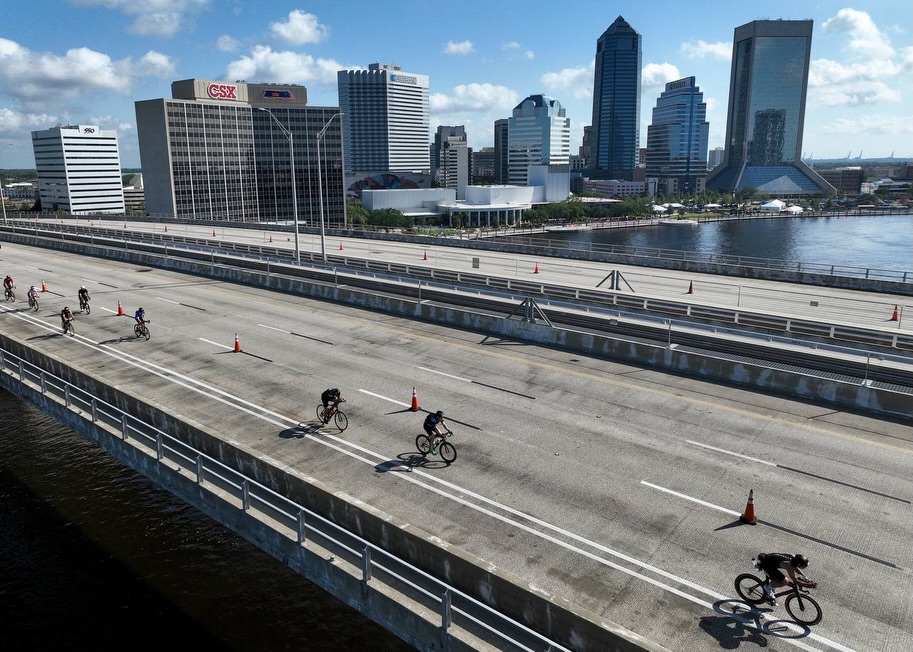
IRONMAN recently hosted a new full-distance race in the United States for the first time since the one-off IRONMAN Alaska in 2022. IRONMAN Jacksonville welcomed 1,900 entrants for its inaugural edition, with approximately 1,400 athletes crossing the finish line. For a new, early-season IRONMAN that had a relatively short runway (only being announced in early September of last year), it was a success from an athlete perspective.
It also, however, was a massive traffic disruptor in the area. Traffic was snarled for hours, as reported by local news. As one would probably expect for a full-distance race, the biggest issue was the bike course. Drivers were frequently stuck, or re-routed constantly as they attempted to find a way around the course. Some, unfortunately, took matters into their own hands, with two collisions with athletes; none were deemed serious. There was also a near-miss with a drunk driver who swerved through both the bike and run courses; he was arrested and charged with eight felonies and a dozen misdemeanors.
These types of issues are common and, in Jacksonville’s case, for two reasons. First, it’s the general type of teething problems that come from hosting an event in a city for the first time. You don’t ever really know how traffic will ebb and flow on race day until you’ve seen where the choke points actually are, and how drivers respond to it. The second, of course, is the population density of the area. There’s approximately 1.8 million residents in the Jacksonville metro area, and is the 38th most populous metro area in the country. It’s the third largest metro area to currently host an IRONMAN event, trailing The Woodlands and Sacramento.
In other words — it’s a lot of people. And, despite IRONMAN and the city of Jacksonville putting it just about everywhere that the race was coming and that there would be traffic impacts (heck, me here in Oregon saw it on every platform I can think of), that’s just too many people to really know that it’s happening. Even local government officials claimed, after the fact, that they did not know that the race was going to be impacting their community until either the day before the event, or while sitting in traffic.
As you would expect, the complaints were thick and fast from residents. The sheriff of St. John’s County, where a large part of the bike course took place, denounced the event and discouraged it from returning. For its part, Jacksonville released a statement, acknowledging that there had been pain points but that they were committed to following through on their three-year contract with IRONMAN.
“We are a world-class city, and IRONMAN chose us because of that. We benefit from the tremendous economic impact, the global exposure, the energy on our riverfront, and the pride on the faces of athletes crossing that finish line. We have a three-year commitment to this exciting event, and we intend to honor it by getting better every year IRONMAN Jacksonville comes to town. That means celebrating what worked and being honest about what could have been done better.
We are committed to a smoother experience for everyone next year, and are already in conversations with IRONMAN organizers, JSO, and city staff to conduct a full after-action review to make sure traffic and safety concerns are meaningfully addressed.“
Those conversations started the Monday fo…
Continúa leyendo el artículo completo
Sigue la noticia en Slowtwitch
Por respeto al trabajo del medio y a los derechos de autor, mostramos solo un extracto. Lee la pieza completa en la fuente original.
Leer artículo completo en SlowtwitchBIKEND es un agregador. Todos los derechos pertenecen a Slowtwitch y a Ryan Heisler.